AI intake software for bankruptcy attorneys: what should it actually do?
Useful bankruptcy intake software should do more than collect names and debts. It should organize Chapter 7 or Chapter 13 facts, identify missing periods and unreadable uploads, keep client-fixable gaps separate from attorney decisions, and carry the source record into forms and prefiling review.
- Evidence
- maintained answer
- Reviewed
- Aug 13, 2026
- Review note
- The workflow, professional boundary, primary sources, and linked product path were checked against the current public product.
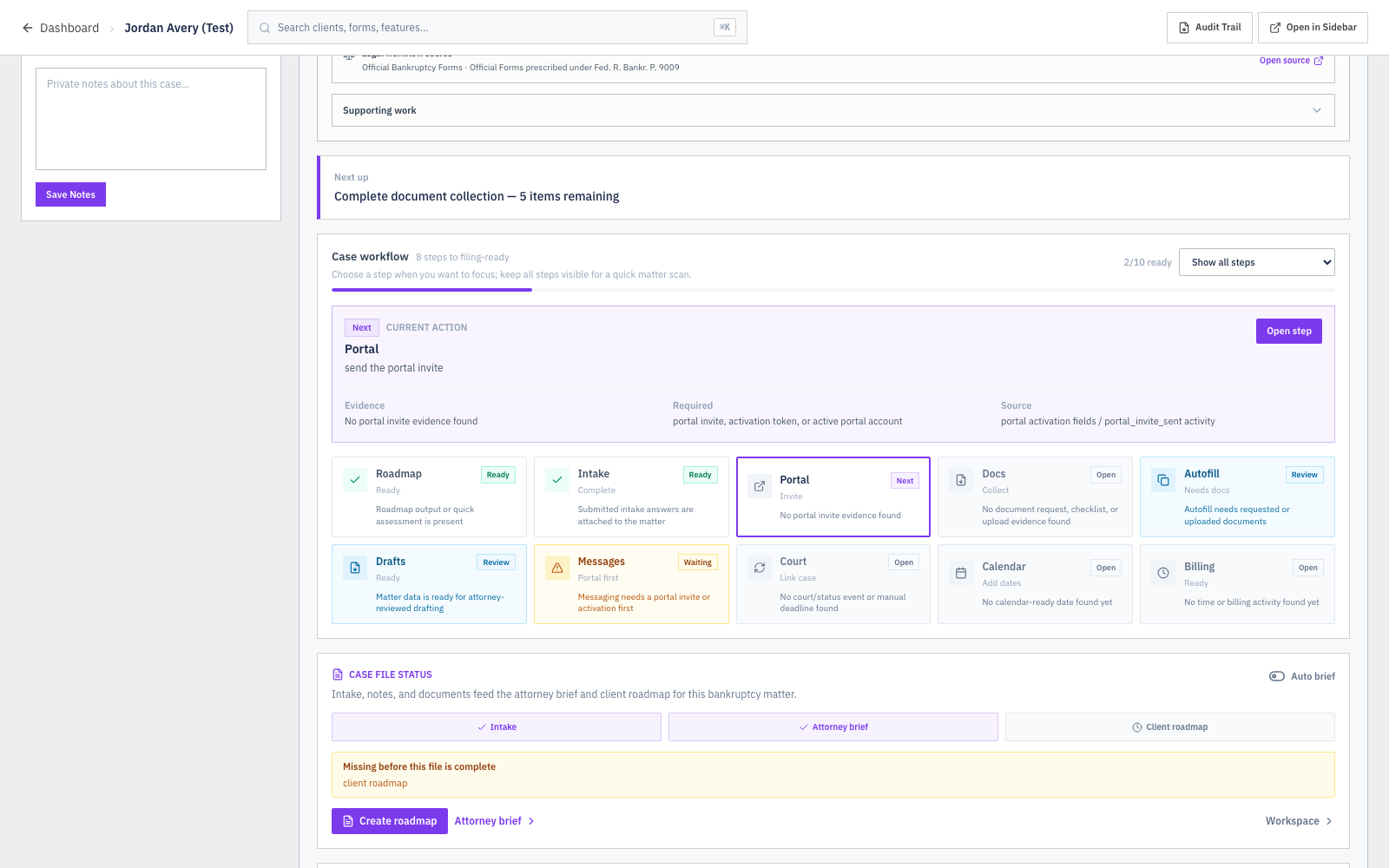
Fictional sample data shown; no client information
Minimum useful workflow
A high-volume bankruptcy practice needs one continuous path from prospect to review, with no re-keying between intake, document collection, means-test preparation, and schedules.
- Branch intake by chapter and household facts
- Request exact income and asset records
- Detect missing statement periods and unreadable files
- Preserve source links and unresolved attorney decisions
- Prepare reviewable form data without presenting a filing conclusion
Where AI helps and where it stops
AI is useful for classification, extraction, consistency checks, drafting requests, and organizing a proof record. Exemption choices, eligibility conclusions, filing strategy, and legal advice remain attorney work.
How DocketBuddy fits
DocketBuddy connects practice-specific intake and a client portal to bankruptcy matter work, proof gaps, means-test preparation, schedules, deadlines, student-loan review, messages, time, and billing. Firms that only need intake and document preparation can start with DocketBuddy Ready.
Use a closed-matter evaluation scorecard
Give every product the same fictional or closed matter and record whether it preserves the client answer, supporting document, missing period, exact correction request, attorney exception, and final review state. A polished summary without that chain is not attorney-ready intake.
- Source survives extraction
- Wrong-period upload is caught
- Client correction is specific
- Attorney issue is held
- Review state is exportable
Questions
Does DocketBuddy file a bankruptcy case for the attorney?
No. DocketBuddy organizes facts, sources, forms, and review work. The attorney controls legal conclusions, filing decisions, and court submission.
Can a firm use only intake and document preparation?
Yes. DocketBuddy Ready covers intake, uploads, specific correction requests, communications, and preparation for attorney review.