AI demand package software for personal injury attorneys
Useful demand-package software should organize liability facts, medical records, bills, chronology, wage loss, liens, insurance coverage, and unresolved treatment gaps before it drafts. Every important statement should be traceable to a source or marked for attorney confirmation.
- Evidence
- maintained answer
- Reviewed
- Aug 13, 2026
- Review note
- The workflow, professional boundary, primary sources, and linked product path were checked against the current public product.
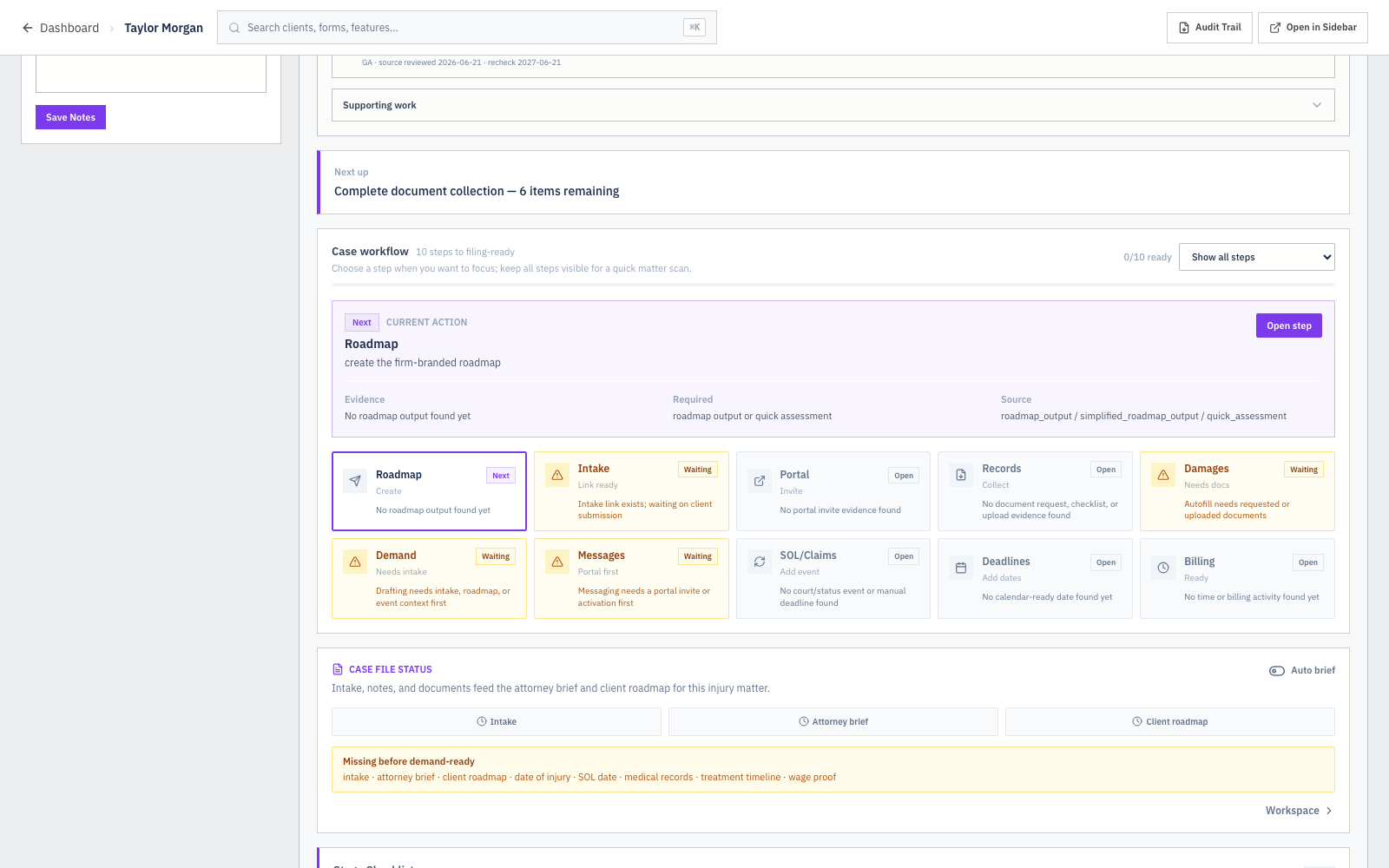
Fictional sample data shown; no client information
Inputs before prose
A polished demand is not useful when the source set is incomplete. The workflow should make missing records, bills, coverage, liens, and chronology gaps visible first.
Reviewable work product
The attorney should be able to inspect liability, causation, treatment, damages, liens, settlement posture, and source coverage independently before approving a draft.
What DocketBuddy covers
DocketBuddy supports claim control, medical chronology, liability and causation proof, damages, liens, settlement and disbursement, trucking controls, medical-malpractice timing, and attorney-reviewed demand work. It does not make settlement decisions.
Run a source-coverage scorecard
Use a closed file and inspect ten consequential statements across liability, treatment, bills, wage loss, liens, and the requested amount. Record whether each statement opens to a source, is marked as an inference, exposes contrary material, or is held for attorney confirmation.
- Source-linked statements
- Contrary evidence visible
- Treatment gaps exposed
- Unsupported amounts held
- Final attorney approval
Questions
Does DocketBuddy send a demand without attorney approval?
No. Drafts and calculations remain attorney reviewed, and unresolved source gaps stay visible.
Can the workflow handle truck and medical-malpractice cases?
Yes. Relevant matters can show multi-defendant, FMCSA, preservation, discovery-rule, repose, and expert-affidavit controls.